
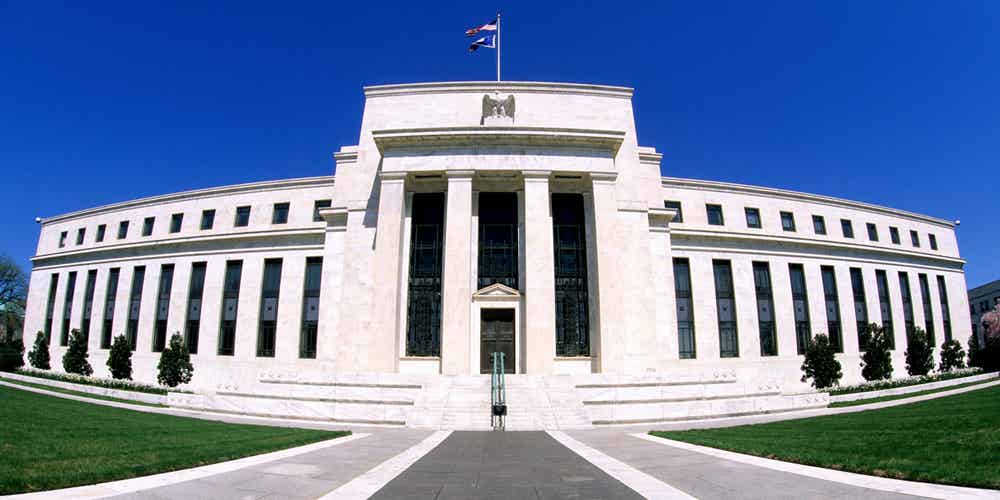
The Federal Reserve held its benchmark interest rate steady on Wednesday, signaling a cautious approach as officials assess inflation trends and potential economic shifts under President Donald Trump’s administration.
In a statement, the Fed described the labor market as “solid,” with unemployment at 4.1%, while saying inflation “remains somewhat elevated.”
Fed Chair Jerome Powell said that policymakers are not in a rush to adjust rates.
“With the economy remaining strong, we do not need to be in a hurry to adjust our policy stance,” Powell said in a news conference.
The decision follows last year’s series of rate cuts, which lowered the federal funds rate from 5.3% to 4.3% while there have been concerns over slowing job growth.
However, with hiring rebounding and inflation showing persistence, the central bank appears more hesitant to ease monetary policy further.
Trump’s Influence on Rate Policy
Powell said little on Trump’s recent comments regarding interest rates and energy prices.
The president has stated that he intends to “demand” lower rates and claimed that boosting domestic energy production and cutting regulations would ease inflation.
“I’m not going to have any response or comment on whatever the president said,” Powell said. When asked if Trump had contacted him directly about rate cuts, Powell responded, “No contact.”
Economic Policy Uncertainty
Fed officials are monitoring potential economic shifts stemming from Trump’s proposed policies, including tax cuts, tariffs, and deregulation. Powell reiterated that the central bank is waiting for more clarity before making policy adjustments.
“We don’t know what will happen,” he said. “We need to let those policies be articulated before we can even begin to make a plausible assessment of what their implications for the economy will be.”
Global Rate Cuts and U.S. Borrowing Costs
While the Fed remains cautious, central banks in Europe, Canada, and the United Kingdom are moving toward rate cuts to stimulate their economies. In contrast, Japan is raising rates after decades of deflation.
Despite the Fed’s previous cuts, borrowing costs remain high for American households. Mortgage rates have hovered near 7%, while the yield on the 10-year Treasury recently surged past 4.8%.
Powell acknowledged the challenge for homebuyers, noting that high borrowing costs “will likely continue.”
A Structural Banking Problem?
Some economists argue that the Fed’s struggles with inflation and interest rates stem from deeper structural issues within the banking system. The Federal Reserve and the broader financial sector operate as a government-backed monopoly over the supply of loanable funds, which critics say distorts market dynamics.
Countries that have treated credit as a public utility, such as Russia, China, and certain European nations, do not face the same cyclical instability in lending and monetary policy.
Georgist advocates for banking reform argue that a publicly controlled credit system with full-reserve banking could provide more stable and equitable access to capital while preventing the financial sector from dictating economic conditions.
For now, the Fed remains committed to its cautious approach, with Powell indicating that any future rate cuts will depend on inflation trends and labor market conditions.

 The Daily Renter
Leave a comment