
For Part 4 of our series discussing the many sources of economic rent, we’re looking at rights-of-way. Rights-of-way strike an interesting balance between being produced non-reproducible by others. Let’s dive into why and find some solutions.
Introduction
Water, electricity, sewage. These are all utilities that play a tremendous role in our well-being. Quenching our thirst, powering our TVs and computers, flushing away our waste are all invaluable appliances in our modern lifestyle.
Naturally, in order to offset the costs associated with performing these services, we pay the service provider so that they can remain in business. We typically do this by getting a bill for the water or the internet that tells us how much we need to pay.
Seems pretty simple right? Well, not really. There exists a relatively unknown caveat to these services that can make their operations very problematic for the customers they provide for. Utilities are a notable subset of what are known as natural monopolies.

Not to be confused with monopolies over nature (as in owning a plot of land), natural monopolies are industries which, due to high costs of entry for competitors, are predisposed to being run by a single supplier with non-reproducible market power.
Natural monopolies are a pretty broad topic as far as economic studies are concerned, and are loaded with several different debates over what resources create them (network effects for digital platforms for example).
Thus, this article won’t cover the ins-and-outs of all types of natural monopolies (other examples may be covered in future articles). However, it will talk about the concept of natural monopolies and its most famous example, utilities, like the three mentioned above.
So, without further ado, let’s understand the problems and the solutions of natural monopolies.
Better One than Many
Natural monopolies are a special source of economic rent. They’re manmade but aren’t legislated to exist by the government unlike other manmade monopolies (for example intellectual property).
Georgist writer Jeffrey Smith made an article covering this interesting scenario. As is evidenced by its title, “Manmade Utilities Spout Natural Rent,” utilities create economic rent much like a natural resource would, since such industries are naturally inclined to being controlled by one supplier.
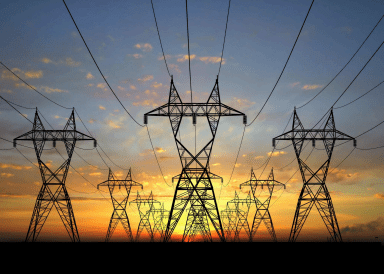
As Smith also points out, many natural monopolies actually rely on the extensive use of natural resources in order to make their operations possible. The most prominent example of this are what are known as rights-of-way. Rights-of-way are specific land routes for transportation, which are necessary to provide many of the utility services we rely on, like water transport or electricity.
These transport routes are only suitable to serve one provider and the infrastructure that provider creates and maintains, which leaves us with a pretty important question:
Why can’t we just make more naturally monopolistic infrastructure, like more water pipelines or more electricity transmission lines, to invite competition?
The problem is that duplication of infrastructure along rights-of-way is wasteful and too costly for competitors to make use of. Having multiple electricity transmission lines or water pipes leading to a house along a specific right-of-way is a loss of resources for whoever has to provide them when one of each will do the job regardless.
Henry George himself recognized this problem and understood that trying to add competition would simply be an inefficient use of resources in dealing with natural monopolies. Seeing competition as impossible, he instead advocated for a pretty unique solution by his standards, which we’ll talk about later.
However, while rights-of-way and other sources of natural monopolies are generally better off run by one than many, this in no way lets their ownership off the hook. There are big problems associated with natural monopolies being left alone because, of course, they’re still monopolies.
Suppliers having non-reproducible levels of market power, even if it’s more efficient than having competition in this specific case, can still cause tremendous inefficiencies and inequalities, especially for services as important as providing water or electricity.
For example, in 2013 the Georgist organization Prosper Australia released a report detailing several sources of economic rent and their evaluations. Only public (not already privatized) utilities were evaluated, and the result came in at a whopping $220 billion dollars.
Another example comes from the Southern United States, where utility monopolies still exercise an extreme amount of control. Many of the regulated utility monopolies south of the Mason-Dixon line have taken to fighting the advent of renewable energy while remaining incredibly powerful in terms of charging high prices.
Despite the regulations put on the utility monopolies of the South, the problems with them still remain. However, while they may seem outdated, those regulations exist for a reason, as they were one of the many societal changes to come out of the Progressive Era of the early 1900s. Natural monopolies used to be far worse during the 19th and 20th centuries, attracting mass criticism and a desire for reform.
Historical Trouble
The size and scale of natural monopolies have been a major issue since the 19th century. As far back as 1848, John Stuart Mill drew attention to them as a problem in the free market that demanded special attention and regulation.
During the Gilded Age, a few decades after Mill pointed them out, many naturally monopolistic industries, like railways and electricity, fell in the hands of wealthy industrial barons. One of those men was Peter Widener, who was ranked as having been the 29th richest American in history, with an estimated net worth of about $46 billion (in 2024 US dollars).
Widener and Gilded Age barons like him who invested in natural monopolies didn’t get their wealth through producing and providing services. Instead, they profited mostly off owning non-reproducible rail lines and utilities, using their power to extract wealth from the cities those pieces of infrastructure served.
In fact, Widener and the like used their extensive power to help dictate how cities at the time urbanized and grew, an extreme display of their stranglehold over city services.

This, of course, was one of the many examples of rent-seeking in the Gilded Age that Henry George drew attention to. As part of the wave of progress seeking to ameliorate the ailments caused by monopolies and their non-reproducible nature, Henry George targeted natural monopolies in his desires for solving the double-headed threat of harmful taxation and extensive rent-seeking.
However, George’s answer to the question of natural monopolies was quite unique compared to solutions he recommended for other non-reproducible resources and privileges; and, in contrast to something as universally recognized among Georgists as the land value tax, George’s recommendation for natural monopolies created quite a few disagreements.
George’s Solution and Controversies
In contrast to other cases where he advocated taxation (like in land and natural resources) or abolition (like in many legal privileges), George argued that natural monopolies should be publicly owned by municipalities, with local governments directly providing the service of utilities themselves.
This has generated some controversy among the Georgists on whether outright public ownership is necessary to make natural monopolies run. Some Georgists, like Robert V. Andelson, have argued that natural monopolies would be solved by directly taxing the rents from the natural resources these monopolies rely on.
Thus, much like the first part of this series, Intellectual Property, there is a bit of a fork in the road when it comes to how natural monopolies are dealt with. While this article won’t be about which one’s better, as that’s best left up to the reader, a simple conclusion from the historical lessons taught here can be drawn.
Conclusion
Natural monopolies are a huge source of economic rent and a massive potential failure in the free market if left unchecked. Many industries which are included in the sphere of naturally monopolized industries are key to our well-being, and how they’re managed and maintained is paramount to how well people can live.
Georgists tend to take a variety of approaches when it comes to dealing with natural monopolies. However, regardless of if it’s municipalization or taxation, a Georgist system which collects economic rent is in a prime position to provide natural monopoly services at a high quality.
If taxation of natural monopoly rents does enhance efficiency, then a Georgist system will provide the best services while raising revenue. If municipalization is taken instead, economic ideas like the Henry George Theorem allow a Georgist system to fully provide high-quality services while recuperating their investment.
Ultimately, each path has its benefits and deserves its own attention among Georgist circles. Indeed, what matters most is ensuring that the unearned income of owning a natural monopoly, and the non-reproducible market power it provides, doesn’t become a free lunch to those who seek to exploit society for many of the utilities and services we need to survive.


 The Daily Renter
Leave a comment