

The Texas capital, once a classic case of unsustainably rising rents in a hot housing market, is now leading the nation in rental price declines thanks to an unprecedented housing construction boom. Rents in Austin have plummeted 22% from their peak in August 2023, the largest drop of any major U.S. city, according to data from Redfin.
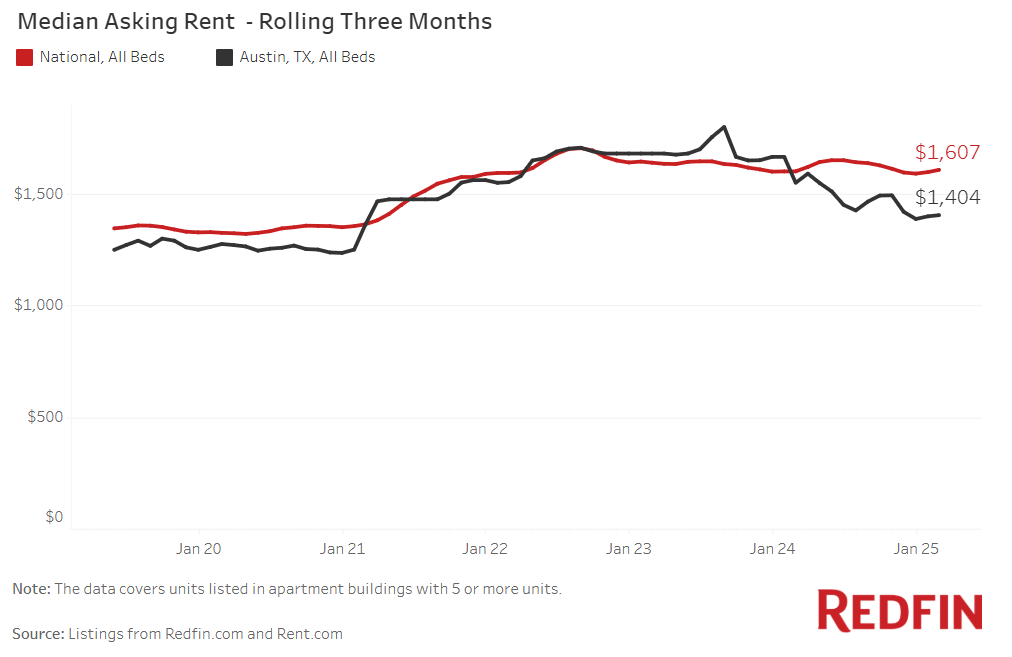
“Nearly all apartments in Austin are doing some sort of specials for move-ins,” said Yasmine Acebo, an agent with Pauly Presley Realty, in an interview in Bloomberg. Landlords are scrambling to fill newly constructed units, offering incentives such as waived fees, months of free rent, and cash credits to attract tenants.
From Shortage to Surplus
For years, Austin experienced rapid rent increases, with prices surging 25% in 2021 alone as an influx of remote workers and corporate relocations overwhelmed the city’s limited housing supply. But unlike cities that resisted growth, Austin embraced pro-housing policies, cutting regulations to speed up development.
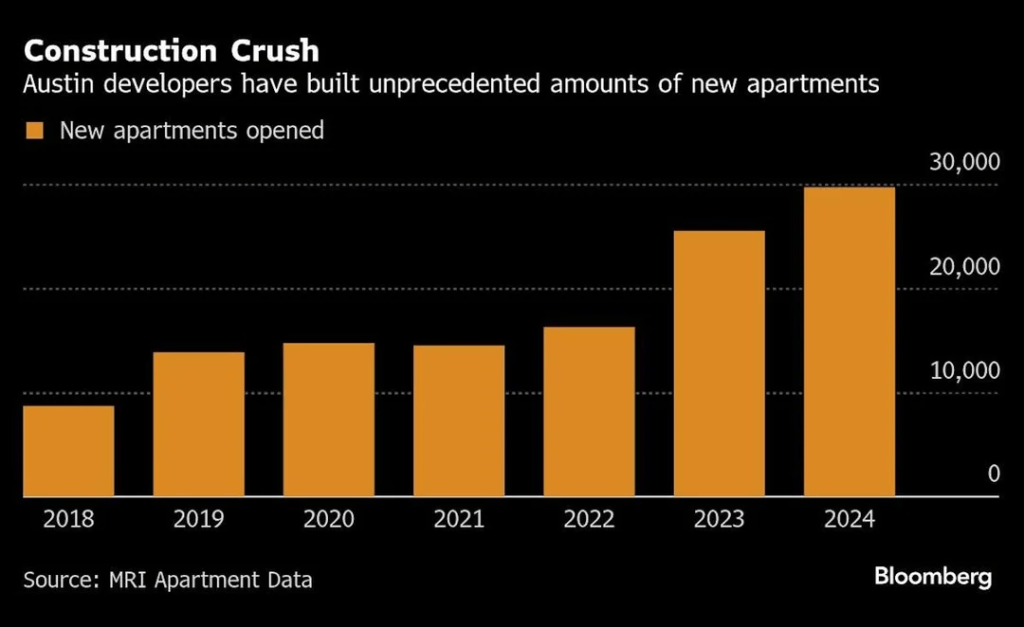
The result: nearly 50,000 new rental units entered the market in 2023 and 2024, increasing supply by 14%, the largest percentage growth for any major metro area.
“This is really Economics 101; it’s supply and demand,” Cindi Reed, director of sales at MRI Apartment Data said in the Texas Tribune. With a flood of new apartments coming online, vacancy rates have soared, shifting bargaining power away from landlords and toward renters.
Policy Shifts Open the Floodgates
The recent building spree was made possible in part by a shift in political attitudes toward development. After years of stalled housing reform, Austin policymakers took aggressive steps to remove barriers to construction.
City officials moved to loosen zoning restrictions and streamline permitting, creating an environment where developers could build at a scale unmatched by any other major U.S. city.
On average, Austin permitted 957 new apartments per 100,000 residents between 2021 and 2023, far outpacing other metro areas, including the next closest in Texas, San Antonio-New Braunfels, which permitted just 346 per 100,000 residents, according to The Texas Tribune.
“The rental market here is saturated with availability,” said Jody Lockshin, an Austin broker and owner of Habitat Hunters, in an interview with Bloomberg. She noted that landlords have resorted to offering months of free rent and lower renewal rates to keep tenants in place.
A Model for Other Cities?
Austin’s approach stands in stark contrast to high-cost cities like San Francisco and Chicago, where restrictive zoning, taxes on improvements and cumbersome permitting processes have stifled housing supply. As the nation grapples with a worsening housing crisis, Austin has become a case study for the effectiveness of supply-side solutions to affordability crises.
Even high-end developments in Austin have had to slash rents. Developers Tishman Speyer and Ryan Cos. are offering eight weeks of free rent at ATX Tower, a luxury residential and office complex in downtown, Bloomberg reported. Other high-end buildings, such as The Bowie and The St. Mary, are advertising similar discounts.
While rents remain above pre-pandemic levels, the recent downturn signals a shift in Austin’s rental market, proving that aggressive housing construction can ease affordability pressures. New housing entering the supply means more options for renters and new homebuyers which makes landlord and seller prices lower to more competitive levels.
When localities have an artificially restricted housing stock, the market is tilted in favor of corporate landlords who have monopolized the limited supply of location sites, raising rents to the market maximum. See economist David Ricardo’s “Law of Rent”.
“There is no question that we are in a cost-of-living emergency in this town,” Mayor Kirk Watson said during his 2022 campaign.
Now, thanks to a surge in new housing, Austin is starting to turn the tide. As cities across the country grapple with rising housing costs and rents, Austin’s experiment underscores a simple but powerful lesson: if the rent is too high, build more housing.


 The Daily Renter
Leave a comment