
Donald Trump’s time as the president of the United States has been controversial. His repeated threatening of tariffs against several countries, including American neighbors Canada and Mexico, have caused panics in domestic markets.
Furthermore, as is relevant to what’ll be covered, he’s recently cut off aid to Ukraine after Ukrainian president Volodymyr Zelenskyy made a visit to the White House. The meeting ended in a showdown pitting Zelenskyy against Trump and his Vice President, JD Vance (whose cousin fought alongside the Ukrainians).
One particularly noteworthy part of Trump’s dealings with Ukraine was a deal surrounding access rights to the country’s highly valuable mineral deposits. Indeed, starting near the end of February, Trump has attempted to force Ukraine to accept a deal granting mineral rights, worth around 500 billion US dollars, to the United States. The supposed goal, given at first, was for the deal to be a “repayment” for American aid given throughout the war.
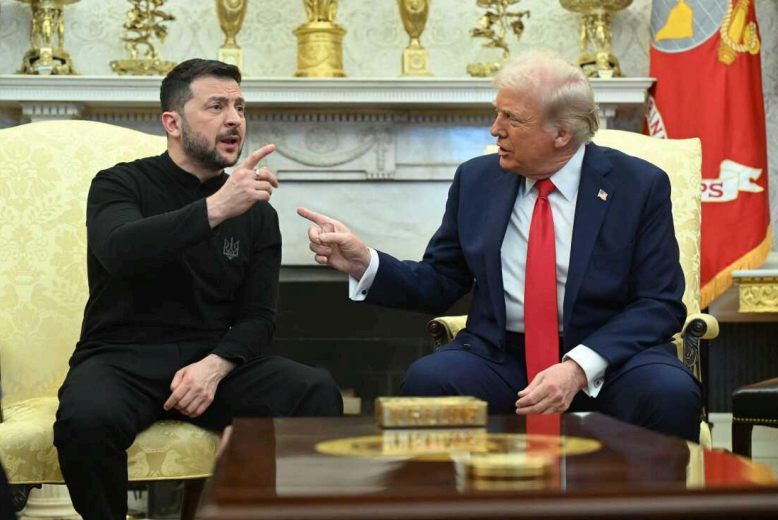
However, the purpose of this agreement is dubious. Donald Trump has had dealings in profiting off natural resources before, and this deal may be no different. To understand this, we need to know why these mineral deposits are so valuable, and how Trump’s past is a sign for what the future may hold with this deal.
Our Beautiful, Non-Reproducible Planet
Our planet Earth provides us with everything we need to survive. Land, minerals, oil, even the electromagnetic spectrum, which we use to connect with each other on the internet.
There’s a huge amount of value to be found in using these resources, which can be realized by directly owning them. However, ownership doesn’t have to be direct, as governments will often hand out special privileges that grant exclusive ownership over how the Earth’s resources are used as well.
Patents, for example, decide who exclusively controls the newfound innovations that unlock ways for us to use natural resources. Patents can be tremendously valuable, as evidenced by the patent war for the very recent and very relevant Ozempic.
However, there is a massive caveat to all of these resources and privileges: they’re non-reproducible. We can’t make more natural resources due to the laws of nature, and we can’t create more legal privileges due to the laws of the government.
While you might say that there are certain practices like land reclamation which adds to the Earth, that isn’t actually creating new nature. Instead, it simply changes how nature functions, as reclamation transforms what was once underwater, naturally given land into above-ground land. At the same time, reclamation doesn’t give more of the land most of us want to live in, as already ultra-valuable locations like urban downtowns or residential neighborhoods won’t just be duplicated in land recently taken from the sea.
Natural resources and legal privileges can not be reproduced by anyone who is excluded from them. Since there is no alternative for society to look to in terms of new producers of natural resources or legal privileges, their only option to make use of these resources and privileges is to ask their current owners for access.
The implications of this are severe: Owing to the fact that we as a society can’t produce more of them, whoever owns these resources and privileges can force wealth out of society as it is willing to pay, without having to produce or provide anything in return. This unearned wealth is referred to as economic rent.
Donald Trump is one of the men who knows this truth very well. So well, in fact, that he used it, particularly with owning land, to build much of the billions in his personal fortune.
Trump’s Background in Owning the Ground

Donald Trump got his wealth through controlling real estate. While the first images that come to your mind may be eye-watering skyscrapers, real estate isn’t just about the buildings. The real power comes in the land, which is an equally, if not more important factor in the value of an estate, at least in the cities.
As it just so happens, Trump has claimed ownership to vast amounts of valuable real estate across the world, including in his hometown of New York City. Some of the most valuable plots of land within the Big Apple gave Trump his riches and power. But this land wealth wasn’t earned through Trump producing it with his own hard investment though, no.
Instead, those riches came from his land’s extreme scarcity compared to how demanded it was by society, and the fact that no one could duplicate and make more copies of his land to provide it for cheaper prices than what he was offering.
Trump’s excursions in land profiteering haven’t always gone well for him though. In the early 1990s, Trump faced one of his many bankruptcies. This particular bankruptcy owed itself to declining property values after a massive crash in the price of land, which forced him into debt.
This bankruptcy serves a valuable lesson: keep pushing society to its limits in how much it can pay for access to non-reproducible assets, and everything eventually comes crashing down. However, this lesson seems to have passed over his head, as Trump continues to hold his fortune through his ownership of valuable land across the world. While his organization has made improvements to these plots, it’s the scarcity of the land that does the heavy lifting for him.
In fact, the problem has only gotten worse. Trump now holds political powers that allow him to broaden his horizons, and he has his sights set on a country currently undergoing a brutal war for its freedom, that he knows he can exploit.
A New American Oligarchy?
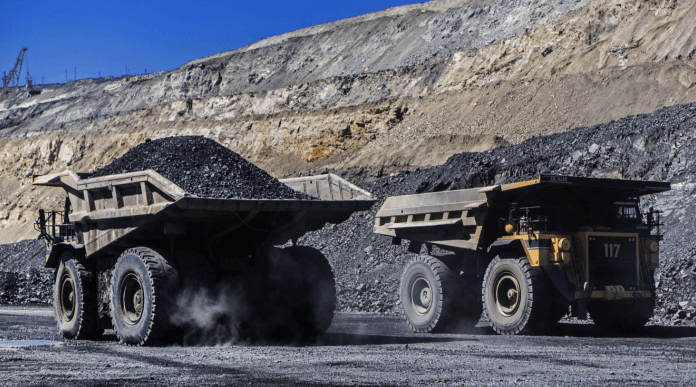
With what we know now about Trump’s background with the land, the claim that Ukraine’s mineral rights should be handed over to the United States, could just be a simple continuation of Trump, and now his colleagues, attempting to get away with extracting wealth from exclusively controlling nature.
The total value of Ukraine’s minerals that Trump claims is “compensation for American aid” far exceeds what the United States has given to the Ukrainian government. As we’ve already established, Trump has asked Ukraine for mineral rights worth about 500 billion US dollars. However, the US government has only given about 130 billion, just about a fourth of the value Ukraine may have to give away.
This discrepancy serves as a backdrop for what this deal may truly represent. Owing to how extensively Ukraine’s rare earth minerals are used in many modern day appliances, the fact that Ukraine’s deposits cannot be reproduced in other parts of the world, and that Ukraine has made extensive use of American aid against Russia, the White House is using this deal to leverage its position as a once-staunch ally of the Ukrainians to make an attempt at grabbing their mineral deposits and capturing that economic rent.
Despite the claim that the mineral deal would seemingly give the United States a stake in “supporting” Ukraine’s future, that stake could very well be a simple cover for a future which is far more exploitative.
That future being to give the Trump administration, and others who stand to gain from the deal, a path to the colonization of wealth that should really belong to the Ukrainian people, allowing them to carve out oligarchic powers for themselves.
The White House’s attempts at grabbing Ukraine’s natural resources give flashbacks to a similar story seen about 35 years ago, when the Soviet Union collapsed. After the implementation of a market system, several post-soviet states suffered the rise of oligarchies who were able to concentrate ownership over their countries’ non-reproducible natural resources, ranging from land to oil.
The reason for this was that the value of these resources were left untaxed by post-soviet governments during their transition to a free market system, leaving them free for the taking for unbridled wealth and power.
In a harrowing forecast of what was to come, around thirty well-established economists wrote a letter on November 7th, 1990, around a year before the Soviet Union fell. While the economists praised the move towards a free market system, they warned Gorbachev that allowing the Soviet Union’s non-reproducible natural resources to be taken without taxing economic rent would tremendously poison the post-Soviet economy.
Unfortunately, the warning wasn’t heeded, and post-Soviet natural resources eventually fell into the hands of wealthy oligarchs. 35 years down the line, these oligarchs have been tremendously harmful wherever they may roam, a classic example of what is known as the resource curse.
It seems that history is repeating itself, as Ukraine is now being extorted for the value of its rare earth minerals by a new, American, oligarchy. What can we do about it?
A Solution if Time Allows It
Unfortunately, there isn’t much that can be done right now. Ukraine is currently fighting for its freedom from an authoritarian, war-mongering Russian regime led by Vladimir Putin.
However, if there is any period of peace, a potential solution can be found in the works of Henry George, whose ideas were what inspired that aforementioned letter to Gorbachev. George was an American economist who lived from 1839 to 1897, witnessing much in the way of change across the landscape of the United States. He lived through the Gilded Age, a time in American history where the hoarding and extractive ownership of non-reproducible natural resources like land and legal privileges like patents led to the rise of what were known as Robber Barons, effectively an American oligarchy.
At the same time, heavy taxation and tariffs, the latter being what Trump seeks to implement, made goods and services more expensive by pushing production down. Between these two issues, the tremendous increases seen in technological prowess due to events like the Second Industrial Revolution didn’t actually benefit the common man, but instead left them worse off.
Metaphorically speaking, the American Dream was being ground to dust between the double-headed demon of harmful taxes levied by the government, and extractive rent-seeking on those non-reproducible assets owned by the Robber Barons.
Seeking to remedy this, George argued that, in a free market system, the rewards for producing and providing goods and services should go untaxed and unburdened, while the tolls paid to the owners of non-reproducible resources and privileges should either be taxed (as a new way to raise public revenue) or abolished.
As it relates to Ukraine’s mineral rights, modern supporters of George’s ideas have advocated for what is known as a severance tax. Like the name implies, it’s a charge on the value of natural resources at the time of their severance from the ground, designed to be compensation for the depletion of whatever non-reproducible natural resource deposit is being used for extraction.
This should also be paired alongside competition for extraction rights over deposits instead of a private or public monopoly over the extraction industry, which would keep natural resource extractors on their toes for facing better competitors.
As a real-life example, Norway has been using a similar system for its oil since the late 1960s, resulting in a sovereign wealth fund for the Norwegian people that is worth about 1.7 trillion dollars. Now with cutbacks in American funding, Norway could use the fund to provide much needed aid to Ukraine.
Regardless of if the mineral deal goes through, the severance tax would be a good way for the Ukrainian government to recoup the value of any mineral wealth it can still use for funding, without having to tax the hard work of its people.
Of course, economic policies aren’t as important as national survival. However, if there is a temporary time of peace to provide some respite to the Ukrainian people, an idea like the severance tax, and others advocated by supporters of George’s ideas, could prove extremely beneficial.
How soon those times of peace will come or how long they will last is still uncertain. Though if one thing is for certain, a conclusion can be drawn from these recent events.
A Distasteful Conclusion
While we don’t know how the ceasefire in Ukraine, and the corresponding mineral deal, will look, it’s very clear that the White House wants to use Ukraine’s vulnerability to steal vast swathes of mineral wealth from the Ukrainian people.
Trump has a background in building his wealth off exclusively owning pieces of the natural world, and his second term as president has just granted him the power to bring his extractive mindset to the international stage.

In an act of disgrace to the ideas of freedom, the Trump administration has turned what was once aid and support for Ukraine to protect itself and its national identity, into extortion for profit from the Ukrainian people’s necessary resources, inherently given with our non-reproducible planet.
This is all to say, regardless of how successful Trump and his colleagues end up being in their attempts to rob the Ukrainians of their mineral wealth, their acts will be remembered in infamy across history.


 The Daily Renter
Leave a comment