
A recent trend among American states, including Pennsylvania and Florida, has been a push to get rid of the property tax. This is born out of the idea that once somebody pays for a piece of land and the building built on it, they should automatically be entitled to the gains they get from them.
If history shows anything about this sentiment though, it’s that such a decision is incredibly poor. To understand why, we have to go over the necessity of taxing specifically the land portion of a property, and what happens when that land is left for profit to its owner.
An Important Preface: The Land Portion of the Property Tax should be the Target
The taxable value of a specific property is made up of two sections, the land portion and the building portion. When it comes to what people should pay taxes on, the land portion is necessary and beneficial, but the building portion is needless and detrimental.
The reason, simply put, is that buildings are produced while land is non-reproducible.
The value of a building is based on how high quality its production is, the better built, the more valuable. With a tax on buildings, if society tries to improve a piece of land through construction or maintenance, they’re effectively punished with higher taxes. The result of this is that people are discouraged from building as much as they would otherwise want to, which is destructive to the economy and society.
Contrast this with the land, whose value stems not from the work of its owners, since humans didn’t make the land, but from the fact that it can not be reproduced by human hands and thus is inherently scarce. Landowners don’t have to work their own land in order to extract an income from it, and can just sit around waiting for it to be brought at an incredibly high price without providing anything in return, encouraging vacant speculation and hoarding.

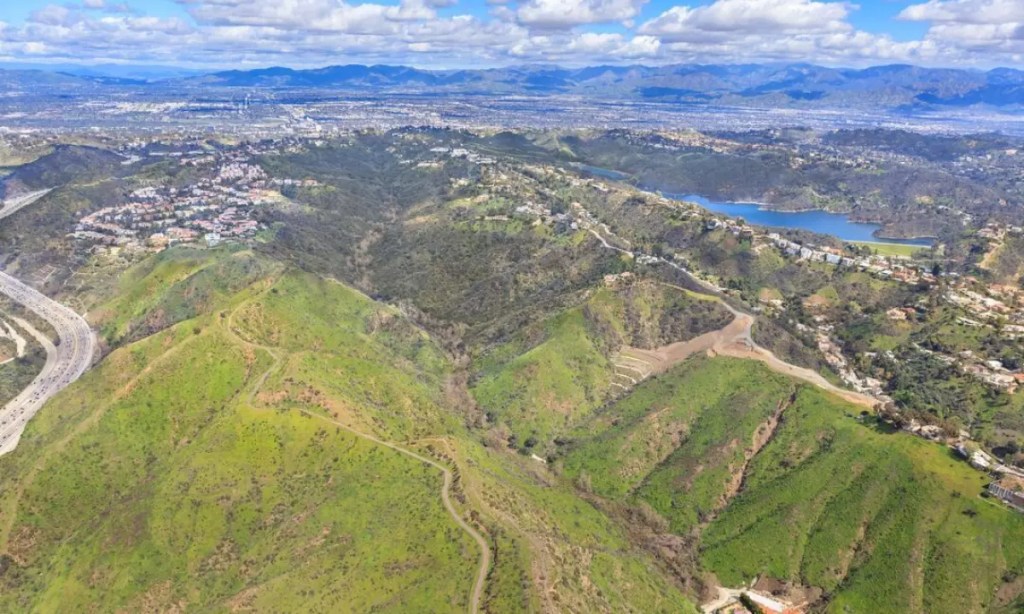
Empty plots like in the photo above are allowed to exist because landowners can simply profit off their exclusive ownership of whatever land they own. Since nobody can make more of these specific plots of land to provide at cheaper prices, there is no proverbial fire lit under the behinds of these landowners that would spur them to a better use of what they own; in contrast to reproducible assets like a specific position in a job market or running a business within a specific industry.
When people are allowed to freely profit off exacting such payments out of the landless, the results are destructive to both the society and the economy, similar to taxing buildings.
How Land Fuels the Crisis of Affordability
Land banking corrupts many incentives within the economy and society. Some examples include NIMBYs who fight tooth and nail against any new housing development to make their neighborhood land more accessible, or even housing developers who only release housing when land prices are high, instead of in a timely manner when they’re built.
High prices to access the land because its owners can freely profit from the exclusive ownership distorts the economy heavily. Farmland, for example, has boomed as a tool for land speculation, ensuring higher rents and prices are taken from hard working farmers and given to landowners. When farmland is hoarded and its price is artificially hiked because of said hoarding, farmers are effectively locked out of providing us the food we put on our tables, leaving them stranded and millions starving.
The income of assets like land, which are non-reproducible by the excluded, is zero-sum and gives rise a relationship that destroys economies and societies if it becomes a source of wealth and power.

It’s here where taxing the land through what is known as a Land Value Tax (or LVT for short) becomes necessary. A land value tax does exactly what the name says, taxing the value of the land itself while disregarding any work or investment put into that land by its owner. It’s designed to ensure that owners don’t profit off pure and simple exclusion, and are instead pushed towards actually getting their wealth from doing something productive with the plot they own.
Unfortunately, high land value taxes are rare in our current system. Our taxes, as of now, are based primarily on the value we as individuals produce through our work as laborers or through our investments in businesses, tools, and capital as a whole. These taxes discourage and prevent us from producing and providing as many goods and services as we otherwise could.
In contrast, we leave land and other non-reproducible assets like it relatively untaxed, letting their owners withhold them or hoard them without accounting for the loss to everyone else. This all leads to backwards incentives surrounding how we use these assets.
The golden case of this can be seen in California, which, almost 50 years ago, made the decision to sacrifice its future residents’ well-being to benefit the homeowners of the time. The result has been a crisis of affordability so bad it played a heavy role in causing a temporary decline in the state’s population, a sign of the Golden State losing its luster for many of its current and prospective residents.
The Tax Revolt of the 70s
If we want to understand the mindset California was in 50 years ago, we need to look at their population. Throughout the 70s, California was undergoing a tremendous amount of growth. In the 1980 census, the state’s population grew by about 3.7 million, roughly equal to about 18.6% of the population at the time of the 1970 census.
In line with this massive growth, there came a massive increase in land prices. There was an increasing desire to access California, giving the state’s landowners the leverage to increase prices without any possibility of their plots being reproduced and provided for the landless at cheaper prices.
Those who already owned land in California, including those who already brought homes, saw a massive increase in their overall property prices, from around 30 percent above the national level to a staggering 80 percent. The result of this was, of course, higher property taxes that Californian homeowners had to pay.
Now, as we discussed earlier, property taxes are flawed in that they tax buildings and discourage development. The theoretical ideal would be to abolish the building portion entirely and tax only the value of the land that these homes rest on, allowing people to improve their land without facing a needlessly heavier burden from the tax system.
However, California’s property value growth throughout the 70s and in decades prior had been fueled tremendously by land value growth. As such, the state’s then property tax, also collecting the land value, would have required them to compensate landless Californians a small fraction of the privilege of controlling a piece of the state.
This angered California’s homeowners severely, who, not wanting to face a higher burden to recompense some of their land’s value, ultimately went to war against the property tax and most importantly, against the taxation of land value. The tax revolt of the 1970s, led by its champions such as Howard Jarvis, saw California’s property owners fight for a new tax system that would shift the burden off of them and their land and towards a tax base far less directed at them. The result of the revolt was Proposition 13 (more commonly known as Prop 13),
Prop 13 stipulated several terms that would weaken the impact of the property tax and its capacities, most importantly almost destroying the state’s capacity to collect the value of land. Two particularly big changes were:
- Limiting local property taxes to just 1% of the total assessed property value
- Limiting increases in property value reassessments to just 2% unless ownership is changed
With these 2 declarations, California homeowners prevented almost all of their land value from being touched by the public, in turn letting them build their wealth by excluding the rest of Californian society. In the time since its imposition, the effects of Prop 13 have been, needless to say, problematic.
In the short term, local governments lost much of their revenue, and in turn lost much of their power to provide local services. They instead began relying on aid from the California state government and the federal government. This hurt funding for said services quite a bit. Spending per pupil in California, for example, dropped from 5th in the country to just 47th from 1978 to 1998.

Another impact of Prop 13 was that it worsened racial and economic inequality. As we stated before, the income of land is gotten not by production, but by exclusion. In ensuring this relationship was protected by leaving their land untaxed, California’s land-owning homeowners were able to win the deal by making it more difficult for the poorer areas of California, especially in red-lined areas which were made up primarily of racial minorities, to get access to good locations.
This leads us into the long term impacts of Prop 13. As of now, California’s property tax rates sit at just 0.71%, and with what we know about how property taxes include both the land and the buildings, the effective tax rate on California’s land is most certainly lower.
By allowing almost all of the land’s value to go untaxed, along with having restrictive zoning policies that just recently have been reformed, California has, for about half a century, prioritized land banking over housing construction; the effects of which have been disastrous.
California has the second highest housing price to income ratio of any state in the US. They only trail Hawaii, who, funnily enough, has the lowest property tax rates, and in turn the lowest tax rates on land, in the country.
In turn, the state has a homeownership rate that is nearly 10% below the national average, and about 42% of California households spend at least 30% of their income on housing.
The proverbial flames caused by the housing crisis in California have gotten so bad that it’s even started to burn the state’s crowning jewel, Silicon Valley and the tech industry. The young and spry who look to earn a living by working with technology have been locked out due to California’s unaffordable land prices, hurting the industry and the state as a whole.
Needless to say, California is feeling the consequences of prioritizing exclusion over production. If there is a message that needs to be sent to the state to recover from the effects of Proposition 13, it’s this:
Untax what people make through production and trade, and tax or abolish what people take that is non-reproducible.
Of course, land and nature can’t be abolished since we didn’t even create them, but they can be taxed. Land is the most prominent and necessary resource we need but can not produce more of, and so its taxation is paramount to its efficient use to meet the needs of society.
Unfortunately, despite how much doing the opposite of the above has tarnished the reputation and well-being of the Golden State, it seems other states haven’t gotten the memo.
Nightmares of Californication
Some states which are going through the same experiences of California went through in the 70s are starting to follow them on the train to neutralize property taxes, most importantly in the land, to an extent greater than California did after Prop 13.
The biggest example of this is Florida, where governor Ron DeSantis recently released a statement criticizing the taxation of real estate as part of his desire to abolish it. In his own words:
“You buy a home, you pay off the mortgage, and yet you still have to write a check to the government every year just for the privilege of living on your own private property”
While this makes sense as it relates to the building, since a property owner does have to put in the work and investment to keep their building in good condition, this makes no sense for the land.
As I’ve probably drilled into your head at this point, the income of land is an income extracted from those excluded from the land. Its value doesn’t stem from what its owners do with it, but from the cost imposed on others for exclusively owning it. While that forms the crux of the argument for land value taxation, another particularly damning aspect of land values is that they’re almost purely created by society or nature. This is featured most prominently in the World’s, not excluding Florida’s, most valuable cities, where land value near completely stems from the work of the society surrounding those plots, both through private and public services. There’s a reason why the real estate mantra for buying a good home is “Location, location, location”.
When someone opens a new business or the local government invests in a new school in a specific location, the communities that get those businesses and schools become more desirable places to live in. Since nobody can make more land near those schools or businesses, society bids up the value of those adjacent and nearby plots, bringing their values up. All the while, the land near where all this activity occurs sits and sponges the value of these services to be turned, in our current system, for an unearned income to whoever owns that land.
DeSantis effectively wants to let Floridian homeowners freeload off of Florida’s workers and investors who put the time and effort into making Florida a better place to live. If California and its home prices in its most desired locations teach us anything, it’s that this is a bad idea.
In fact, Florida’s decision to try and end any hope of taxing land comes at an even worse time than California’s decision. The United States is currently undergoing a housing crisis with costs-of-living far worse than in 1978, when the housing cost to income ratio was just 3.2. Compare this to now, when our current housing crisis has resulted in Florida having a home price to income ratio of 5.7.
Ending taxation of the land, in effect telling landowners they don’t have to worry about compensating the society they exclude, would make Florida’s part of the housing crisis tremendously worse.
At the same time, like how it was in California, many local government services that make Florida’s land so valuable currently rely on some form of compensation from local landowners through the land values recollected in part by the property tax, flawed as it may be because of the building portion. Scrapping any tax that local landowners have to pay at all would heavily cut the lifeline for localities to fund many of these services, as it happened in California.
If DeSantis does go through with his plan and end any chance at taxing land, pushing down hard-working and productively-investing folks in favor of those who exclusively hold a piece of Florida’s landmass, then the same lesson learned in California will have to be taught to the Sunshine State too.
Conclusion
We often criticize megacorporations for their extractive business policies, and for good reason. But what’s important to know about these megacorporations is that many of them base their power and wealth in the ownership or exclusive use of assets which are non-reproducible, without paying back their fair share for using these assets. McDonalds acts as a landlord to the stores which sell its products, Microsoft owns 107,000 patents to prevent innovations from being reproduced by the competition, Big Tech and big wireless carriers are fighting for bands of the electromagnetic spectrum, a natural resource, to use in their operations, and more.
Prop 13 effectively allows for a not-as-egregious, but still highly relevant version of the power-seeking seen above. Allowing near unchecked profits in exclusively controlling a non-reproducible plot of land plays a game similar to what these ultra-rich monopolistic companies play, even if not to the same extent.
Mason Gaffney, a Georgist economist and California homeowner who lived from 1923 to 2020, and who was heavily critical of Prop 13 and its impacts, puts it in his own words during a documentary created by fellow Georgist Fred Harrison:
“We received, but we did not give back”
And so long as this mentality continues and manifests itself in our current system, the brutal difficulties suffered by those swept under the tides of being unable to afford a happy life shall continue to have the claws of suffering tear their lives to shreds.
Those who fought for the existence of Prop 13, both at its inception and in the modern day, have shown they’re willing to let those claws tear apart the poorer and younger so they can maintain their exclusive position as the owners of the plots of land whose value they contribute little to none to.
Now that the dust has settled and the lesson has been broadcasted to all who may see it, it’s effectively being ignored. Other states with large populations of wealthy landowners are now racing their states to go further than California went. If they manage to succeed, then the same lesson will be waiting for them at the bottom of the fiscal barrel.

 The Daily Renter
Leave a comment