
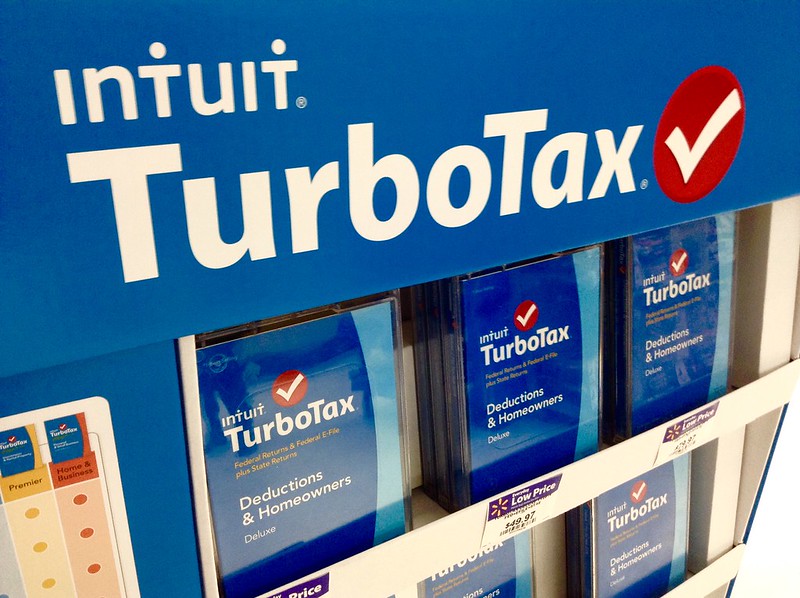
The most common and least controversial opinion that people tend to hold when it comes to taxes is that the tax code should be made simpler and the filing process should be free or at least very cheap.
Companies like TurboTax have lobbied for decades, to many Americans’ dismays, for the US government to NOT offer free tax filing services, thus keeping their business model alive through sheer rent seeking rather than competitive pricing or service innovation.
Why are taxes so complicated to begin with that it requires an entire industry to help people navigate? It’s because we have a multi-tax rather than a Single Tax System.
The Multi-Tax System
In the United States today, the tax system is fragmented across dozens of overlapping levies on both producers and consumers. Workers and small business owners are squeezed from multiple angles:
- Income taxes at the federal, state, and sometimes local levels take a share of wages and salaries before people ever see their paycheck.
- Payroll taxes (for Social Security, Medicare, and unemployment insurance) further carve out a mandatory portion of earned income.
- Sales taxes fall on nearly every retail purchase, inflating the everyday cost of living.
- Excise taxes target specific goods like gasoline, alcohol, and cigarettes, often disproportionately burdening the working class.
- Tariffs and import duties increase the price of foreign goods, creating hidden taxes on consumers.
- Corporate taxes are passed on indirectly through higher prices or lower wages.
This maze of taxes on both sides of the economy (production and consumption) creates what amounts to a double tax system when we zoom out. On one side, public taxes directly penalize the creation and exchange of goods and services. On the other, private “taxes” from rent-seeking entities (landlords, monopolists, patent holders, and other unearned income claimants) are left untaxed. The result is that workers and consumers are hit twice: once by government taxes, and again by private rent extractions that drive up the cost of housing, healthcare, energy, etc.
Property taxes deserve special attention because, unlike other taxes, they contain within them the seed of a rational system: a tax on land value. When levied on land itself rather than on the buildings and improvements atop it, property taxes discourage speculation and channel community-created value back into the public treasury.
Unfortunately, property taxes in the U.S. are usually applied to both land and improvements, which penalizes construction and maintenance. Large landowners, who stand to benefit the most from untaxed land rents, have pushed for constitutional limits or outright abolition of property taxes in states like Florida and Texas.
What they don’t tell voters is that these “cuts” almost always come paired with increases in income, sales, or gas taxes that hit workers and consumers instead. A better model, pioneered in Pennsylvania and elsewhere, is the split-rate property tax, which taxes land at a higher rate while reducing or eliminating taxes on buildings, aligning with the Georgist principle that unearned rent is the proper source of public revenue.
Economist Mason Gaffney described this interaction through his concept of ATCOR (All Taxes Come Out of Rent). His insight was that, in the end, every tax (whether on wages, sales, or capital) reduces the maximum rent landlords and monopolists can extract. Yet rent seekers prefer these taxes, because they shift the burden onto workers and consumers while keeping land and monopoly gains officially untaxed.
The result is a kind of privatized “double taxation”: the state collects from the workers and small capital owners who do the most producing and consuming, while landlords and monopolists are free to raise prices and rents.
Rent-seekers will always push for this arrangement, but not so far that it impoverishes their tenants, workers, or customers, since those “cash cows” are the ultimate source of their unearned income. The Henry George Theorem, first formalized by Joseph Stiglitz, provides the inverse perspective to ATCOR: at efficient city size, the sum of land rents is just sufficient to fund the optimal level of local public goods. Taken together, Gaffney and Stiglitz show two sides of the same coin: either you tax production, which shrinks the rent fund, or you collect rent directly, which makes other taxes unnecessary.
This sets the stage for the solution: the revival of the Single Tax Movement, which sought to simplify the code, eliminate distortions, and collapse these many taxes into one efficient levy on land rent and anticompetitive monopoly profits.
Bringing Back the Single Tax Movement
The idea of a Single Tax is not new. In the late 19th century, Henry George galvanized millions with his proposal to abolish nearly all taxes and replace them with a single levy on land rent. George argued that land, unlike labor and capital, is not produced by human effort. Its value comes from nature itself and from the community’s growth and investment. Because no individual created land, no individual has the moral right to claim its increase in value as private profit. That increase, he said, belongs to the community.
The Single Tax movement spread across the world, influencing policies from Australia to Denmark and inspiring generations of reformers. While the movement lost momentum in the United States during the 20th century with the invention of the automobile kicking the land crisis can further down the road, its logic has never lost relevance. Today’s debates about housing shortages, inequality, and tax reform echo the very problems George identified in Progress and Poverty (1879).
A modern Single Tax approach would mean:
- Shifting the tax base off of production and consumption: so workers keep their wages, entrepreneurs keep their profits, and consumers are not penalized for spending.
- Taxing land rent and monopoly privileges directly: capturing the unearned income that accrues to landlords, resource owners, and holders of artificial monopolies like intellectual property hoards.
- Simplifying the tax code drastically: collapsing dozens of overlapping taxes into a straightforward system that cannot be gamed by lobbyists or buried in loopholes.
This is not just a matter of fairness; it is a matter of efficiency. When we tax productive activity, we discourage it. When we tax unearned rent, we free up the economy to grow while ensuring that the benefits of growth are shared. The Henry George Theorem shows that land rent, if collected properly, is sufficient to fund local public goods. Gaffney’s ATCOR shows that if we fail to collect rent, other taxes eat into it anyway, but in the most damaging and roundabout way possible.
In short, the Georgist Land Value Tax and other taxes on the non-reproducible assets of rent seekers transforms what is now a schizophrenic double-tax system into a unified, rational system that funds society from its natural revenue source. The two become one.
Conclusion
Americans are right to demand a simpler, fairer tax code. They are right to be frustrated that companies like TurboTax profit from complexity, while workers and consumers are left to shoulder the burden. But the problem is deeper than tax filing software: it is the very structure of our multi-tax system.
If we are serious about reform, we must move beyond tinkering at the margins and revisit the bold solution Henry George put forward more than a century ago. A Single Tax on land rent and monopoly privileges would not only simplify our tax code, but also liberate labor and capital, lower the cost of living, and ensure that the wealth created by the community returns to the community.
The choice before us is clear: continue propping up a labyrinth of taxes that punish production and reward rent-seeking or embrace a system that aligns justice with efficiency. The Single Tax is not a relic of the past, it is the blueprint for a more prosperous, more equitable future.

 The Daily Renter
Leave a comment