

So far in this series, we’ve discussed economic rent as income gained from taking non-reproducible natural resources for oneself. Usually this manifests itself in exclusive ownership or a monopoly of some sort, whether it be land, Intellectual property rights (IP) or non-renewable resources.
Therefore, resources once available to all are locked away, and the owners of such resources extract rent by charging people for the “privilege” of access to things the owner did not create. In the previous example of IP (intellectual property), a method of production once available for everyone to discover and use is now locked behind a patent.
The patent holder has an advantage over others by denying them the opportunity to use the same methods. Therefore, the act of taking economic rent can be rephrased as gaining an advantage by denying the public natural opportunities.
Paying the Price
Pollution is one of such activities, It destroys natural opportunities for everyone to the net benefit to the polluter. By shirking the costs of the damage pollution creates, the polluter gains an advantage. Instead others have to pay for the damages. This is the mechanism by which the act of pollution gains economic rent.
Another way of looking at this is that every action has an associated cost. If a company pollutes, the cost of that action is not paid by the company to the public. Therefore, the company has a competitive advantage by lowering production costs. In essence, the public is subsidising the polluter by paying the cost of their damages.
Let’s use an example to illustrate: Imagine two farms, both use the same amount of fertilizer but farmer A takes care to limit fertilizer runoff and farmer B doesn’t. The fertilizer runoff results in an algal bloom downstream killing fish and reducing water quality.
For farmer A, the price is paid in the measures he took to stop fertilizer runoff. For farmer B, the reduction in operational costs is paid by the people affected by the algal bloom downstream, giving farmer B the advantage. Even if the damage is limited to the farmer’s own land in the case of soil pollution, the destruction of nature is a cost to all people for generations to come.
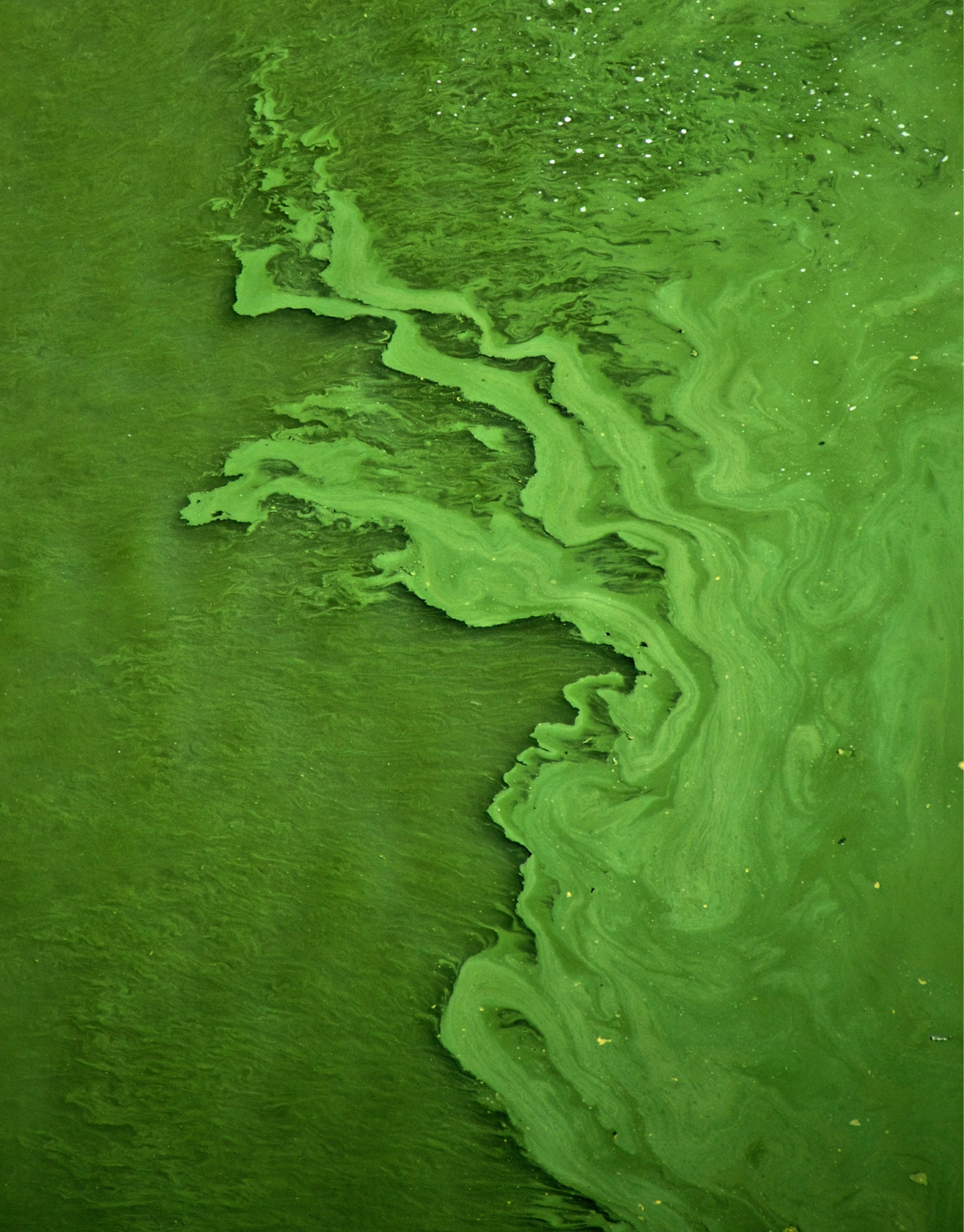
From a Georgist perspective, pollution is the destruction of common property as all natural things cannot be claimed by any single person because they are not man-made. So, like people who vandalize public property get fined; polluters must pay compensation to everyone for the destruction of common property.
However you cut it, the conclusion must require polluters pay the full cost of their negative externalities whether it be damage to nature, the land or their surroundings, for pollution can take many forms. But this begs the question: how do we calculate the price that has to be paid?
Counting the Cost
Pollution can come in countless forms, from the obvious air, water and soil pollution, to the more niche, light and noise pollution. All have hidden costs that must be calculated before compensation is demanded.
The most obvious solution is to have the polluter foot the bill for any cleanup required to rectify the damage and to repay all affected parties. This may manifest itself in a hefty fine by the government and a lot of lawsuits depending on severity. This will encourage the polluters to internalise the cost of the negative externality (damage from pollution) as it is cheaper than paying legal fees on top of fines and damages.
This system is already in place but enforcement of environmental laws can be lackluster and for many cases, the cost of cleanup may be too high to justify compared to the damages caused. So other means of pricing pollution must be used. We will address these cases later.
If you’re familiar with Georgist thought, changes in land value can be a great indicator for any positive or negative activity that affects the community. While positive changes are rewarded with a higher citizens’ dividend, negative changes should be punished with taxation.
If the land value tax is considered compensation for a private entity excluding the public from the benefits of a piece of land; isn’t pollution also a permanent exclusion from the benefits of land? So, the polluter being the private entity responsible for this exclusion should be taxed accordingly or asked to rectify the negative land value change.
However, changes in land value can be attributed to many things, it may not be readily apparent that one action led to a change in land values, so these rulings may be contested or inaccurate.
Plugging the Gaps
As mentioned earlier, not all instances of pollution are “worth” fixing. Most of these cases are because the damage is too small relative to the cost of fixing (e.g. carbon capture is a costly procedure). As the saying goes, prevention is better than a cure. It is always more efficient to prevent pollution to begin with.
Though taxing polluters incentivizes a reduction in pollution, it is by nature a regressive tax. Smaller companies will have an additional barrier to entry and the tax would be comparatively more severe for smaller operations due to their relative inefficiency. Though pollution is bad, we can consider some acts of pollution to be necessary for the health of the economy.
So, for more “necessary” acts of pollution from necessary industries and smaller companies that promote competition or are “inefficient” because they trade scale for flexibility. All of these beneficial things have the associated cost of pollution, which should be internalised but their existence may offset the damage they do.
This can be harnessed in the cap-and-trade method, where the government allows a certain amount of pollution exemptions in the form of tax credits (usually carbon credits for carbon emissions). This allows companies to trade these tax credits at a price to internalise the effects of their pollution.
This gives small businesses and efficient businesses a competitive advantage, promoting competition especially in the space of green technology making it cheaper for new businesses to become environmentally friendly from the get-go. This method can be extended to different types of pollution depending on their damage.
Many more solutions exist, but the core goal is to have the polluter take responsibility for the damage they can potentially do to common property, whether it be the nature we share at large, or the neighboring land. When actual damage is done, the hope is to make sure that the public is not responsible for paying for the repairs, thus giving the polluter an advantage.
Conclusion
To summarise, not taking responsibility for pollution gives a competitive advantage to the polluter and a disadvantage to the public that needs to live with the damage caused by pollution. This constitutes an economic rent, as the polluter gains an advantage by destroying non-reproducible natural opportunities.
The solution is to require polluters to pay for the damages caused and to be responsible for the cost of preventing the pollution to begin with. Thus, natural opportunities will stay available for all to enjoy, while minimizing their risk of being destroyed.


 The Daily Renter
Leave a reply to scottonthespot Cancel reply