
Context:
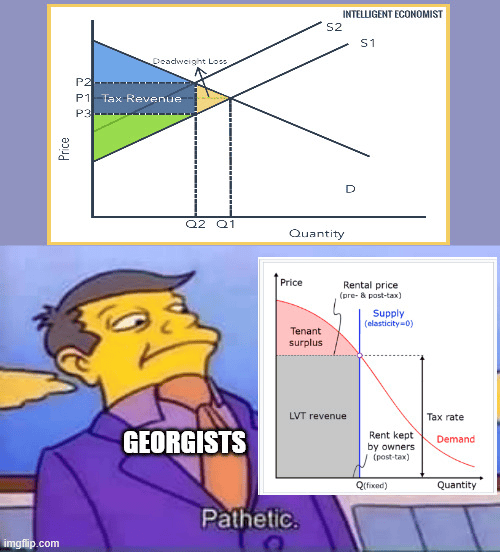
The bottom graph is the supply and demand graph for land, which is fixed in supply, and the LVT revenue refers to a land value tax. What this means is that taxing land doesn’t cause less land to be produced (being a natural resource it’s already non-producible), and so doesn’t discourage production in the same way taxes on produced goods and services do, be it taxing the work of laborers, the investment into capital, or the like.
There’s a whole lot of writings on the efficiency of taxing land (and the income of other finite resources) compared to taxing produced goods and services. But a good one to check out is this one from the Chicago Fed.


Leave a comment