
A common group of questions I’ve seen Georgists get asked on the internet relates to how Henry George’s ideas would impact the use of nature. Some question if a land value tax would encourage sprawl and the development of every parcel under the sun, others if it would entail the destruction of public parks. The general fear is that by taxing nature, we’ll only encourage its destruction instead of enacting its preservation.
But when we look at how nature’s use and abuse is factored into our current economic structure, we can actually derive the opposite. The reason why nature can be used and abused so heavily in our current economic structure is because the cost of taking and abusing nature, a cost placed on the rest of society, isn’t factored so heavily against those who cause it. People can get wealth from taking or outright destroying nature without paying the cost of excluding everyone from those finite resources.
What are some good examples? Let’s start with the basic standard, land.
Land Speculation Wastes Parcels
In one of our previous articles explaining why we must end private economic rents in finite assets, we briefly mentioned land speculators who get their wealth by buying up parcels, not to use them, but to sit on them and wait for their price to rise before cashing in on the increased land value. This hurts the economy of course, what should’ve been productive investment is instead diverted into the simple withholding of a finite resource.
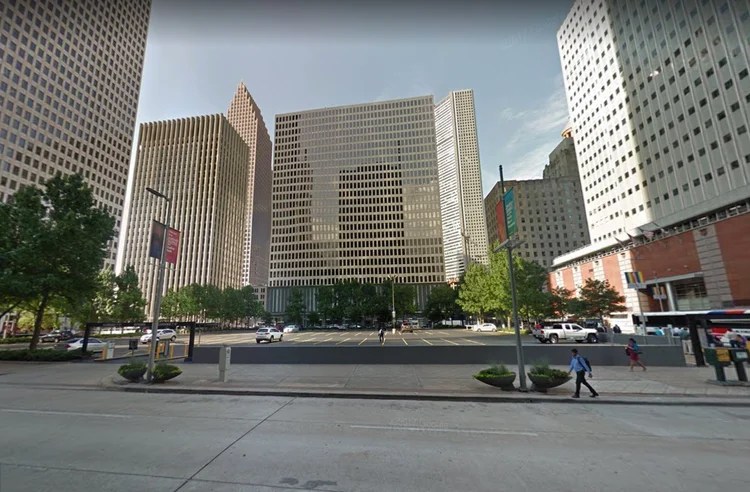
But the effects run deeper than just simply worsening the economy, land speculators holding prime parcels off the market forces prospective land users to go to plots that are still available. What results is a tremendous amount of land waste, where parcels in the middle of urban cores that could otherwise be used to house hundreds of people or scores of businesses instead of a barren lot fit only for parking cars.
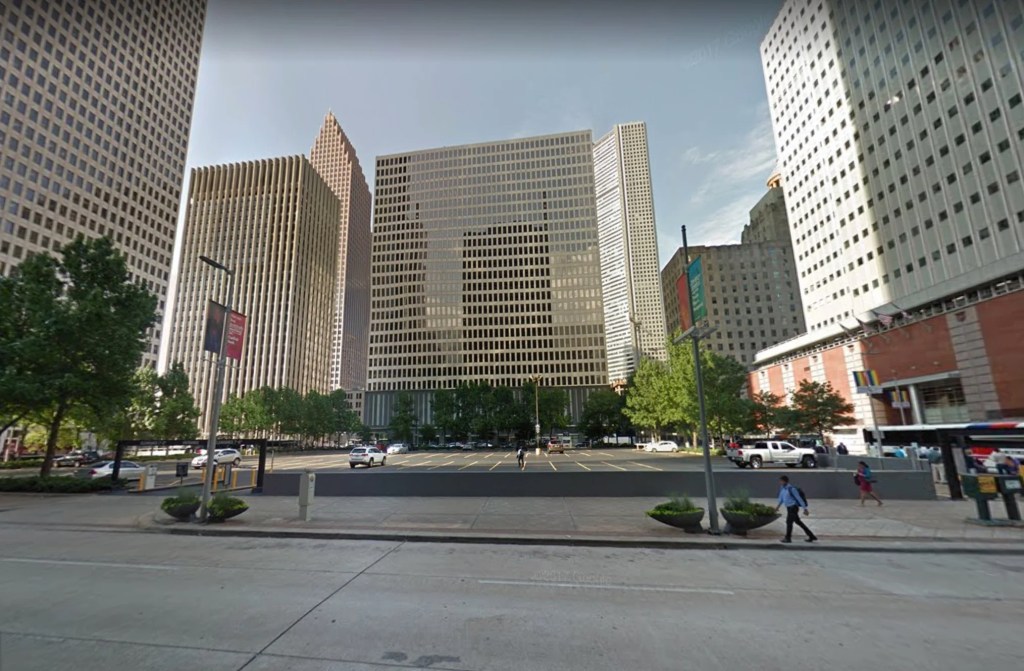
What happens when our most valuable parcels can’t be used? Prospective users are forced to go to land that isn’t locked up in a speculator’s clutches, and more land goes to waste than is needed. When this rewarding of land speculation is combined with actively taxing and punishing those who use the land through taxing buildings and labor, sprawl ends up being massively increased as the land market is hugely hampered.
Strong evidence showing how Henry George’s ideas can reverse these sprawl-oriented trends can be found in those Pennsylvanian cities which have shifted their property tax burden off buildings and towards the land. A study in the article “Can the land tax help curb urban sprawl? Evidence from growth patterns in Pennsylvania” by Spencer Banzhaf and Nathan Lavery show this well, as stated in their conclusion:
The split-rate tax is a long-advocated tool that should lead to greater economic efficiency. Our results indicate that it should also lead to “smarter” growth patterns. We find that capital-land ratios increase in those areas with split-rate taxes and higher land-structure tax ratios. Moreover, the dwelling size effect appears to be modest, so that most of this increased capital implies greater density for the city. Adopting the split-rate tax results in a 4–5% point increase per decade in the growth of the density of housing units, for the first two decades.
This increased density brought by even the small Georgist shift of turning property taxes into pure land value taxes protects nature by reducing the amount of land and nature cities must use to provide ample living space to their residents. Less sprawl from cities means more nature left over on the outskirts that is spared from destruction.
This idea of land efficiency and discouraging waste can also be applied to rural areas, where farmland speculation is rampant. Not only do farmland speculators waste the very parcels we need to grow the basic building block of human survival, food, they price out actual working farmers in the process, kicking up the barriers of entry. More speculation with land and less work put into it means far more land left barren and far more land used than necessary. As it is with urban land, tax the finite rural land people take to protect it from this poor treatment, and more of it will be preserved while at least helping lower prices from being sky high.
Tax the Drying of the Earth
Water is another good example of this idea in practice. A major ecological problem facing countries like the United States is the waste of water resources, and this can be pinpointed to our water policies. As explained by Fred Foldvary in his article “Water Creates Rent“:
Much of the water rights in the American West originate in “prior appropriation,” meaning first come, first served, forever. Some 80 percent of the West’s water goes to agriculture, because the farmers were here first. To keep their water rights, farmers need to use up the water, and that creates waste rather than wise use.
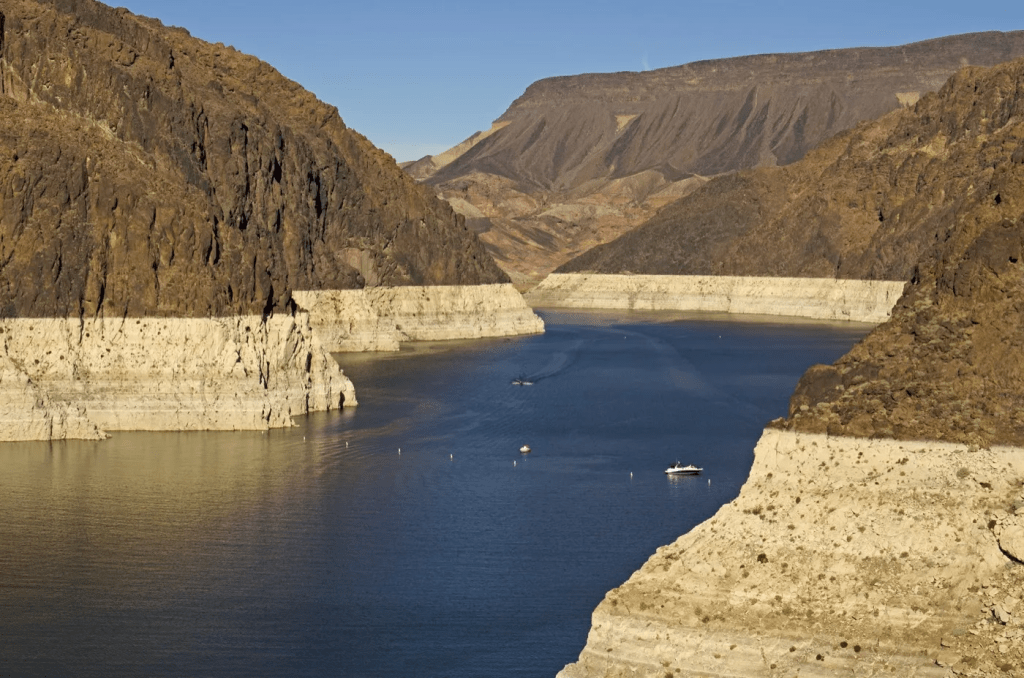
We don’t encourage our water resources to be used efficiently for the sake of protecting what is essentially the lifeblood of this planet and the human species because the cost of taking that water is lost on those who do the taking, and it is this waste Foldvary mentions which is starting to incite fear into those who rely on water sources in danger of running dry, like the Colorado River.
Just like land then, the Georgist idea of taxing water, as outlined by Georgist economist Mason Gaffney, is a much needed remedy to the loss of this finite bit of the natural world. It can simultaneously raise revenue to be used for public services while encouraging keeping water conserved.
There is also the question of the water market, especially when it comes to trading rights. Again, just like land, these rights should be treated as tokens to finite natural resources, and in line with their value should be fully recouped by governments to prevent any possibility of speculation in what should be a public resource. Do that, and water waste can be minimized while making money for public goods.
Clear Cut Pollution
A close corollary of classical Georgist ideas to tax the taking of nature are taxes on pollution. Indeed, many Georgists have come to accept Pigouvian taxes on negative externalities (at least environmentally) as a part of the Georgist platform while providing strong explanations for doing so.
While they’re the most clear cut example, this idea doesn’t have to be limited to just carbon taxes, but can be expanded to account for all sorts of pollution. As explained in “The Green Tax Shift” by the aforementioned Fred Foldvary:
Simply put, a green tax is a levy on pollution. It goes further than a carbon tax to levy a
charge on all harmful emissions in proportion to the damage they cause, ideally making
polluters pay for the full social cost of their emissions.
…
Some economists and policy makers have claimed that the cost of investing in
emission-reducing technology and production methods needs to discount the effect on
future generations, since wealth today is worth more to us than wealth in the future.
Others dispute such discounting as not valid, saying we have no moral right to declare
future lives as less valuable than present-day lives. The green tax shift would make the
question of social discounting moot, as pollution charges would reduce present-day
emissions and benefit those living today as well as those living in the future.
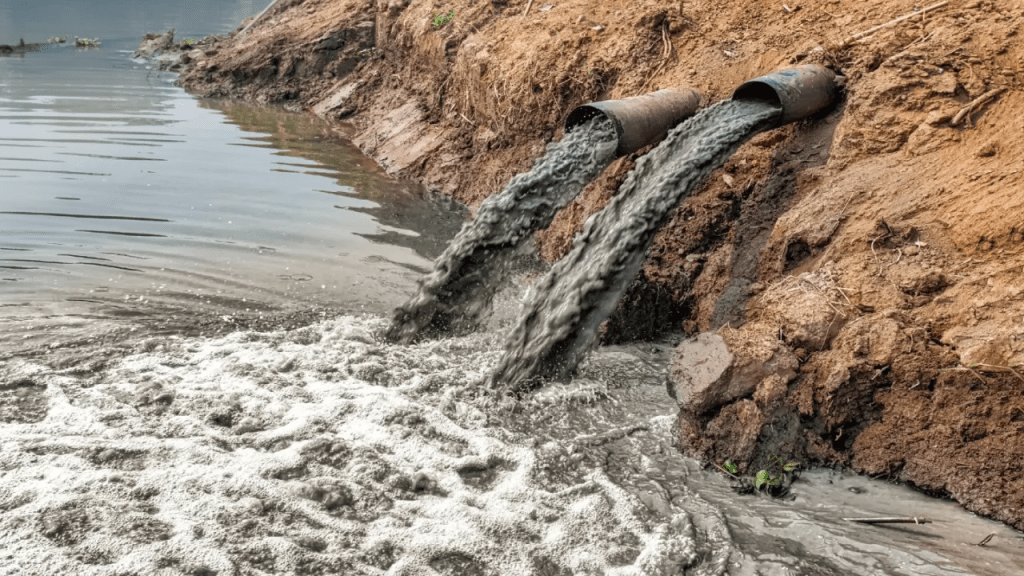
There are many ways to justify taxes on pollution from the Georgist perspective. Be it the finite atmospheric carbon budget being overloaded with emissions, or just the idea that because the natural world is finite, any destruction of it is a damage that must be recompensed; just the same as if fencing it off for personal use.
Whatever the reason, taxes on pollution represent the most direct way nature can be protected in a Georgist system, and similar to water and land can encourage commerce to take on more sustainable alternatives if it means reducing some of the financial burden of using up the planet’s resources in a way that’s unsustainable.
All Nature is Included
Now that we have a basic idea for how Georgist taxation can directly reduce the misuse and abuse of finite natural resources, we can draw a general conclusion of what Georgism exactly seeks to achieve by taxing nature. In a previous article we covered that ending private rents in finite assets can both reduce inequality while growing the economy. That idea can be expanded upon by also acknowledging that recompensing the value of nature can keep it from being wasted and overused, as we see in examples like land and its speculative waste.
There’s reason to believe that this idea could be applied to all natural resources, for the same reason Henry George included all of what nature provides in his original definition for economic “land”. Rent-seekers who hold finite natural opportunities out of use make society use more nature than needed, and so Georgism naturally corrects this through taxation.
This isn’t to say Georgism would fully stop the destruction of nature, but it would slow it down heavily as the cost of its destruction would finally be felt by those who carry it out, not just those who are on the receiving end of losing our natural world. Georgism has always been a green ideology, one that seeks to reconcile the efficient and just distribution of goods and services with the efficient and just use of our ecology.
To close, I would like to quote an excerpt from a writing by the late and great Georgist Bill Batt, which summarizes this idea beautifully:
The consequences of collecting economic rent are to increase prospects for achieving
sustainable development. This is because fiscal instruments constrain the use of
natural resources more than do either CAC approaches or fiscal measures inspired by
neoclassical approaches. Collecting full royalties by competitive auction for nature’s
harvests reverses the exploitation of nature that presently obtains. Establishing proper
prices for such materials and services would likely reduce their appropriation. All this
enhances efficiency and productivity in ways that are consistent with sustainable
economics, and gives recognition and space to elements of the ecosystem so that it is
less threatened with extinction and exhaustion.


Leave a Reply