
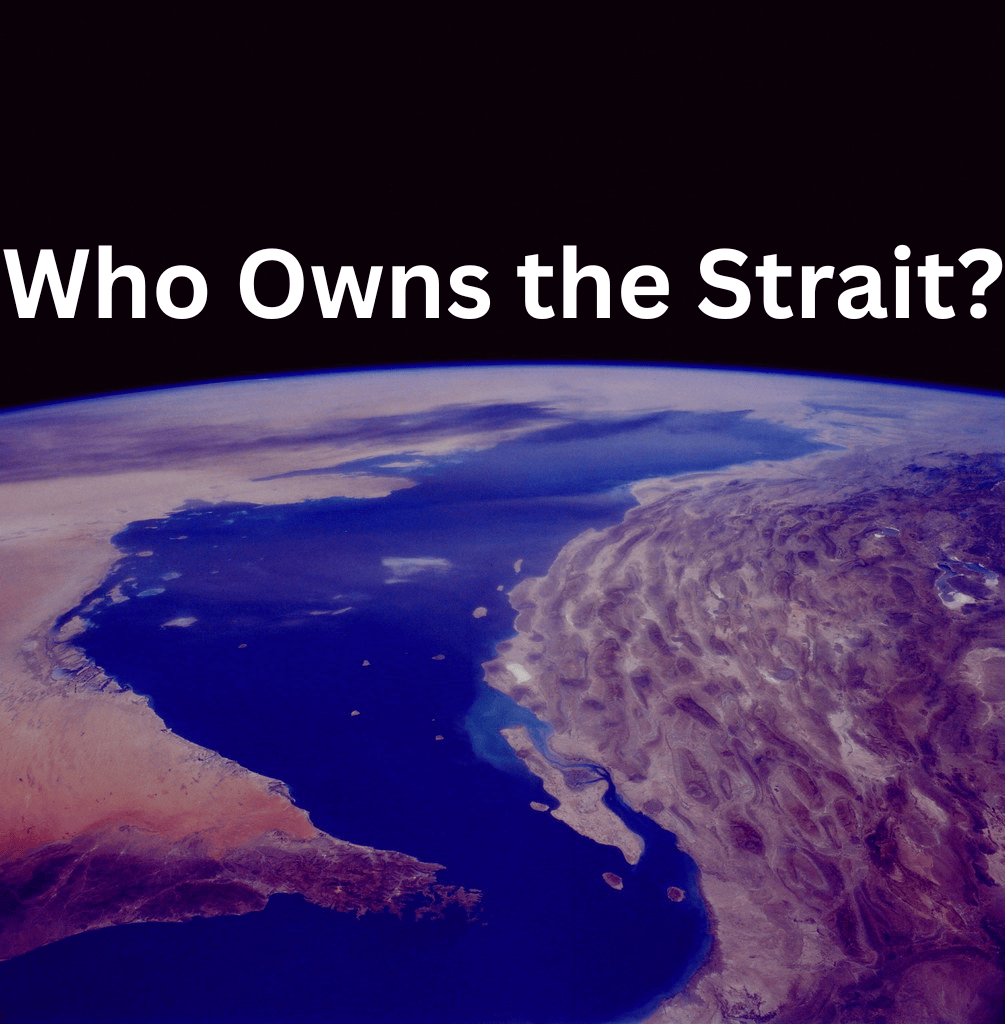
Nobody built the critical pinch-point of global trade known as the Strait of Hormuz. People built the ships and ports, drilled the oil wells, operate the refineries, and navigate tankers through dangerous waters. The waterway itself, the natural geography connecting the Persian Gulf to the open ocean existed before human civilization began.
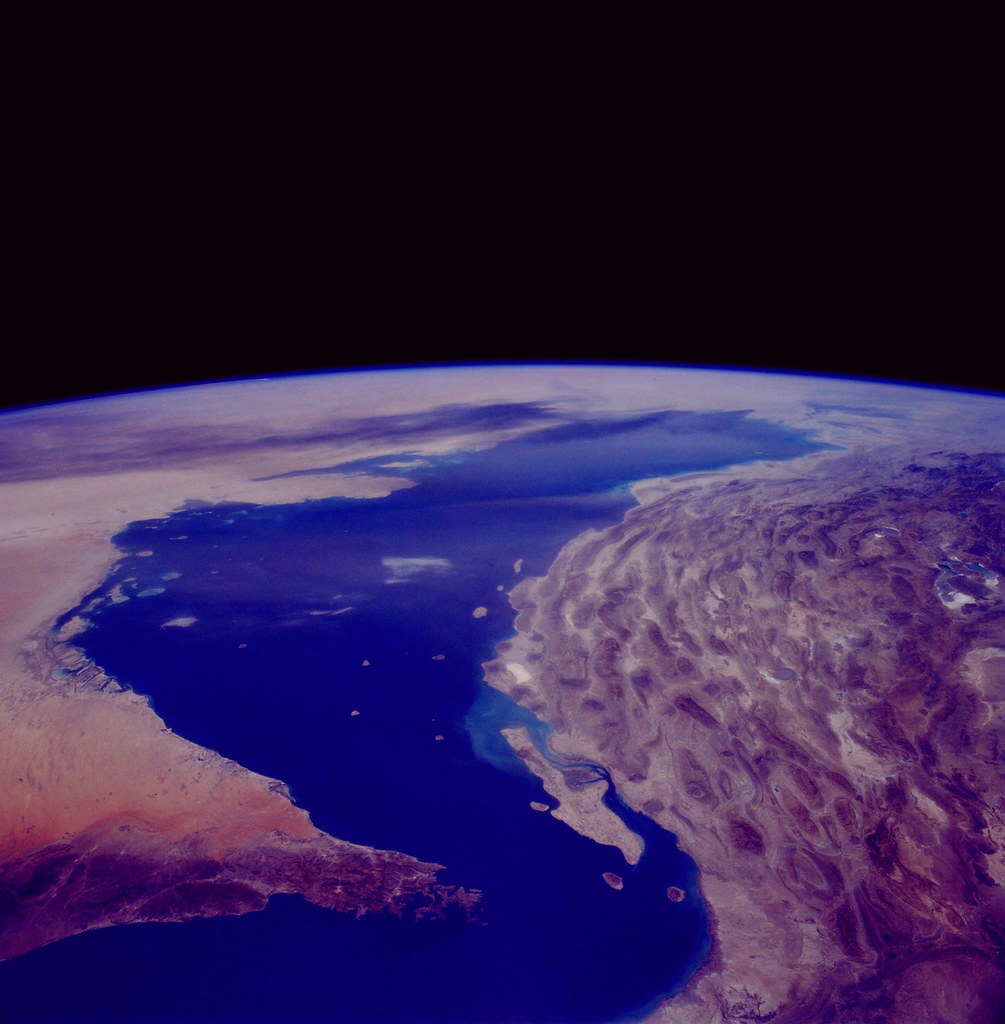
When someone demands payment for permission to cross it, what exactly are they getting paid for? That is the question political economist and land reformer Henry George would ask.
In 2025, nearly twenty-one million barrels of oil and petroleum products passed through Hormuz every day, per U.S. Energy Information Administration. That was about a quarter of the world’s seaborne oil trade. Control over that passage gives whoever can enforce it enormous economic power over people far beyond its shores.
Iran’s efforts to collect passage payments bring that power into focus. Reuters reported in April that at least one ship had paid two million dollars. In May, maritime intelligence firm Windward described an Iranian system of transit approvals and fees, while noting that no official tariff had been published. We should distinguish reported payments from the claim that every ship pays the same established toll.
But the economic question is already clear. If you can demand money because you control an indispensable natural passage, you can collect income without having created the thing people need.
That is where economic rent enters the picture.
For George, “land” meant more than the ground beneath a building. It included natural materials, forces, and opportunities. An oil deposit is a natural opportunity. So is a strategically located waterway.

Providing navigation equipment, rescue services, or pollution cleanup requires real work. Those services have costs, and the people providing them deserve compensation in the form of earned wages. But a payment demanded simply because someone can prevent you from passing is different. The income comes from control of access and is economic rent.
That distinction applies to any controller: Iran, an Arab Gulf state, the United States, a private corporation, or an international organization. Putting a different flag over the tollbooth does not change the economics.
While some may see Iran’s extraction of economic rents from the Strait as a natural response to US-Israeli airstrikes, that leads to a back-and-forth over Iranian and proxy missile attacks on one hand and acts of US-Israeli aggressions on the other.
The point of this discussion is to examine the economic justice of anyone holding a monopoly over natural resources and opportunities, so we will leave it for people to adjudicate the ongoing geopolitical conflict for themselves.
There is another important distinction. A narrow channel has natural limits. Threatening ships creates an additional restriction. We should not confuse the cost of managing a waterway with the price of getting someone to stop threatening it.
What could a different arrangement look like?
I propose Henry George and others would support an international Hormuz trade authority: a shared public institution responsible for managing the strait impartially, protecting peaceful passage, and distributing any legitimately collected economic rents for public benefit.
Iran would have a place in it. So would Oman and the other Arab Gulf states, including Iraq. It could even be a globally scaled commission with a place in the United Nations apparatus or World Trade Organization.
Whatever its structure, it must be truly impartial and representative of all stakeholder nations so as to earn the trust and cooperation of every nation involved. Shipping users and affected coastal communities would need meaningful representation too.
Under a negotiated international settlement, the authority could administer fair, transparent passage charges, with proceeds supporting its services and any surplus shared among participating countries through public funds.
Iran and its neighbors could all receive shares. Everyone would gain a continuing interest in keeping the passage safe and functioning.
There is a serious legal obstacle to acknowledge. The International Maritime Organization says passage through Hormuz must remain free of tolls and charges. Our proposal would therefore require a legally valid international arrangement addressing existing navigation rights. Regional governments cannot simply agree among themselves to sell everyone else a right those users already possess.
And even with an agreement, “fair” cannot mean “as much as ships can be forced to pay.”
Charges would need a defensible basis in services, environmental burdens, or genuine congestion. The authority should have no incentive to manufacture shortages, delay vessels, or threaten closures to increase its income.
Sharing the proceeds of an abusive toll would still leave an abusive toll. The purpose is to make common access secure and its management accountable. Where access can remain inexpensive, that is itself a way of sharing nature’s benefits.
How would we keep this authority from becoming another institution captured by powerful interests?
Elinor Ostrom offers a framework to build off of. Her research identified eight principles associated with durable systems of commons management. Applying them to Hormuz would require careful adaptation of her work. But they give us concrete questions to answer.
First, defining the boundaries. What waters should such the authority manage? What powers does it have?
Second, fit the rules to actual conditions. Navigation risks, environmental damage, operating costs, and the burdens on coastal communities should determine policy.
Third, let affected people participate in changing the rules. Governments need representation, but so do the communities and users living with their decisions.
Fourth, monitor the system. Independently audit ship treatment, fee collection, spending, and revenue distribution. Publish the results for all to see.
Fifth, establish penalties in proportion to violations to rules. Violations should have predictable consequences, including when a powerful member government breaks the rules.
Sixth, make dispute resolution accessible. A shipowner disputing a charge should have a rapid appeal. Countries disputing distributions should have independent tribunals and judicial processes they can use.
Seventh, protect the institution’s right to organize and operate. No member should be able to rewrite the agreement whenever cooperation becomes inconvenient to them.
And eighth, connect different levels of governance into what Ostrom referred to as “nested enterprises”. Local rescue teams, regional administrators, and international maritime institutions should have clear, coordinated responsibilities.
All participating countries would be subject to the rules. No country gets to be the referee of its own dispute. Ostrom and her husband’s work in political science was focused on the concept of polycentricity. As opposed to centralization and decentralization, polycentricity is about there being multiple centers of power operating in a system of checks and balances.
The rents would remain public. Collection rights would not be sold to private investors. Revenue would move through audited public accounts, with a published distribution formula and safeguards against diversion.
And if we invoke humanity’s common right to nature, we should remember people outside the Gulf. International users deserve a voice, and some proceeds could support shared maritime and environmental needs.
Could this ease war tensions? It could create one practical reason to cooperate.
A functioning passage would deliver recurring public benefits. Disruption would jeopardize them. Countries would have an institution through which they could negotiate disagreements before reaching for coercion.
That would not resolve Palestinian sovereignty, sectarian tensions, territorial disputes, or domestic repression. The region’s conflicts cannot be reduced to a single religious division, and a revenue agreement cannot settle them all.
But countries do not need to agree on everything before they can benefit from managing something together.
The claim is modest: shared, accountable economic interests could make peaceful cooperation more rewarding and conflict more costly.
The same principle can move upstream, from the waterway to the oil deposits.
The people who discover, extract, and transport petroleum perform valuable work. But they did not create the petroleum. Its resource rent should benefit the public.
Norway offers an instructive example. In his essay on its sovereign wealth fund, Lars Doucet writes: “Norway’s model for oil wealth is an excellent example of Georgism in action.”
Norway’s system is more than leasing deposits. It captures petroleum revenue through taxation, direct state participation in projects, and dividends from its ownership in Equinor. Its combined marginal petroleum tax rate is seventy-eight percent, applied under rules that account for costs, not to gross oil sales.
Net government petroleum cash flow goes into the Government Pension Fund Global. The fund invests abroad, and a fiscal framework guide transfers to the public budget over time. An exhaustible underground resource is thereby converted into financial wealth that can also benefit future generations.
A fund alone does not prevent corruption or the resource curse. Accountability, competent administration, and limits on spending matter. Nor does sharing oil wealth remove the environmental costs of burning it.
But the principle is applicable elsewhere.
Iraqi oil wealth should help build Iraqi roads, hospitals, and schools, while preserving wealth for future generations. Iranian oil should benefit the people of Iran. Arabian Gulf oil should fund the welfare of all Gulf Arabs.
Public ownership must mean public benefit in practice: services people can use, accounts they can inspect, and institutions they can hold responsible.
At Hormuz, and beneath the oil fields feeding it, the underlying question is the same: Who should benefit from natural opportunities that nobody created?
Henry George’s principles point toward a common claim. Ostrom helps us think about the institutions that could make shared management work. Norway shows one way resource revenues can become lasting public wealth.
Our proposed Hormuz authority brings those ideas together.
It would seek to turn control of a chokepoint into a responsibility to keep passage safe, distribute legitimate rents publicly, and give neighboring countries a durable stake in cooperation. That would not end every religious, racial, social, cultural and political conflict, but it would give this materialistic world real financial and economic incentives for peace.


Leave a Reply